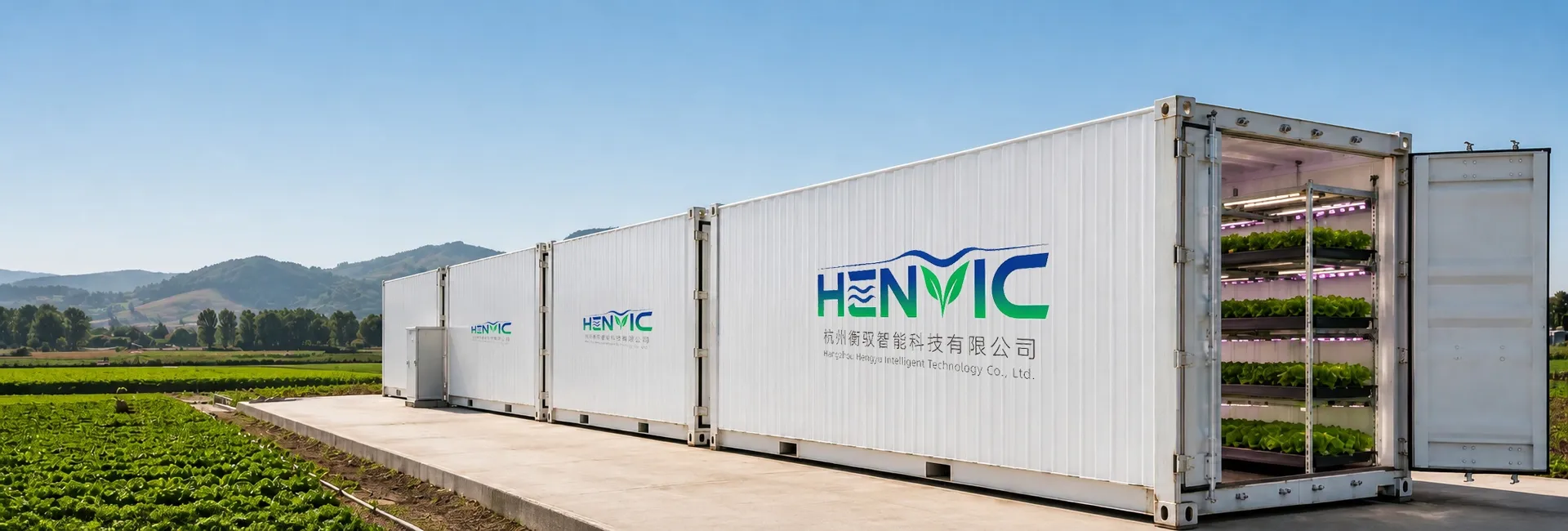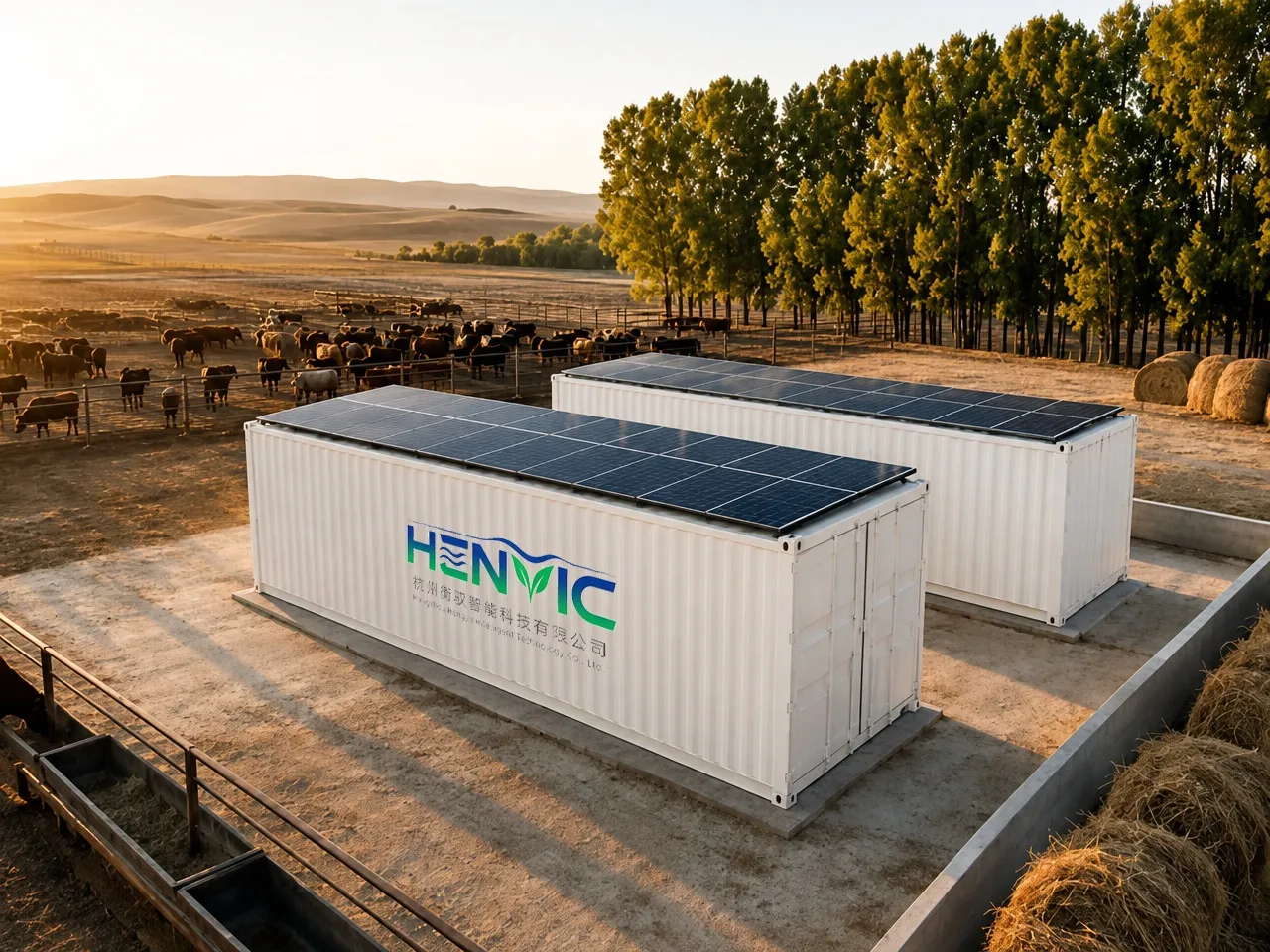
A container mushroom farm is usually described in terms of what it saves: no sunlight, no LED recipe, no soil. The savings are real but incomplete, and they tell you nothing about whether the operation makes money. That answer lives further down the cost line, in the substrate bag. The bag is the closest thing this line has to a raw material, it is consumed and replaced every cycle, and it sits at the front of a chain of costs—sterilisation, colonisation time, contamination risk, uneven yield, hand harvesting—that only becomes visible when you follow a single bag from mixing to the picking tray.
What follows is that walk, cost item by cost item.
Start With the Dry Base
Substrate is purchased and costed on a dry-weight basis, but it is mixed and handled wet. This distinction matters more than it sounds, because almost every supplier quote and every efficiency calculation turns on it, and confusing the two inflates or deflates the numbers by a factor of two and a half.
The common formula uses a bulk ingredient plus a nitrogen supplement. Cottonseed hulls, corncobs, sawdust and crop straw supply the structural carbohydrate—the cellulose and lignin the mycelium will break down. Wheat bran, rice bran or cornmeal supply nitrogen and micronutrients, and are the more expensive fraction. Gypsum is added at a few per cent for structure and pH buffering. Moisture is then adjusted to roughly 60 to 65 per cent. A bag that holds one kilogram of dry base therefore weighs somewhere between 2.5 and 3 kilograms as it enters the steriliser.
The bulk ingredient is a commodity, and its price moves with the agricultural season and with competing demand—cottonseed hulls compete with animal feed, corncobs with biomass fuel and bedding. That makes substrate a variable cost in the truest sense: it tracks markets the grower does not control.
The formulation question is not simply which ingredients are cheapest. It is which combination maximises biological efficiency—kilograms of fresh mushrooms per kilogram of dry substrate—without lengthening the cycle or raising contamination risk. A richer nitrogen loading can push yield up and simultaneously make the bag a better medium for competitors. The recipe is a trade-off, and it is usually the single largest lever the grower has over unit cost before equipment enters the picture.
Sterilisation and Inoculation: The Price of Keeping the Box Clean
Before any of this can be called a mushroom crop, the bag must be sterilised, and the cost of that step is routinely under-budgeted.
The reason is that substrate is, by design, an excellent microbial growth medium—warm, moist, nutrient-dense. Competing organisms, particularly Trichoderma (green mould), will out-compete mushroom mycelium if given the chance. Sterilisation exists to remove that chance.
At commercial scale, solid substrate is either pasteurised with atmospheric steam at around 100°C held for eight to twelve hours, or autoclaved at 121°C for one to two hours. Both routes consume substantial energy—steam generation is a significant thermal load—and both impose waiting time. The bag must then cool to inoculation temperature before it can be handled, which adds hours to the front of the cycle with no biological progress being made.
Inoculation itself must be aseptic. This is not a quality preference; it is a hard operational boundary. A single contaminated bag will spread mould to its neighbours in a packed container. When contamination reaches a batch, the loss is not partial—it is counted in whole racks, and sometimes in a full cycle's input. The economics of sterilisation and sterile handling are therefore not about yield improvement. They are about buying insurance against a loss that can erase the margin on several good cycles.
That framing also explains why substrate cost cannot be evaluated in isolation. A cheaper bulk ingredient that sterilises less reliably is not cheaper. A formulation that requires longer sterilisation pays for the saving in energy and in occupied capacity.
Colonisation: Inventory That Cannot Be Sold
Once inoculated, the bag disappears from the revenue side of the ledger for the next eighteen to twenty-five days.
During colonisation, the mycelium spreads through the substrate at 22 to 25°C in darkness, tolerating elevated CO₂ and producing heat as it metabolises. To the cost account, this period is pure holding time: the substrate has been purchased and sterilised, the container space is occupied, refrigeration is running to remove metabolic heat, and the output is zero. Nothing in the box can be sold until colonisation is complete.
This is the first place the container's space economics become sharp. The forty-foot high cube offers roughly 28 to 30 square metres of floor and, with multi-tier racking, somewhere between 100 and 140 square metres of usable surface. Every square metre given to colonising bags is a square metre not fruiting. The container does not care about that distinction—the rack is either holding colonising substrate or producing saleable mushrooms—but the cash flow does, and the scheduling must.
It is also why staggered batches are an economic necessity rather than an operational refinement. If the whole box colonises at once, the operation runs with zero output for three weeks and then crowds harvest into a single window. Splitting the box into batches, each at a different stage, converts a jagged, cyclical cost into a smooth daily one and keeps the harvest labour roster level. The substrate cost per cycle does not change. What changes is how much of it is sitting idle at any given moment.
Fruiting: Where the Yield Fails to Come Out Evenly
Fruiting is where the revenue is booked, and where the arithmetic becomes uncomfortable for anyone who assumed a bag yields a fixed quantity.
Mushroom yield arrives in flushes. Across a full cycle, the first flush typically carries sixty to seventy per cent of total output, the second around twenty, and the third barely more than ten. This distribution has direct cost consequences. Because substrate and sterilisation cost the same regardless of how the yield is distributed, the early flushes are inherently more profitable per kilogram and the late ones less. A bag that produces 0.5 kilograms of fresh mushrooms across three flushes produces 0.3 kilograms of that in the first seven to eight days.
For oyster and related species under sound management, biological efficiency—fresh mushrooms per kilogram of dry substrate—generally falls in the 40 to 60 per cent band across a full cycle. Push the formula and the environment and you approach the top of that band; let either drift and you sit at the bottom, where the same bag of substrate returns a materially smaller crop for the same input cost.
The environmental parameters that determine which end of the band you land on are unforgiving, and they translate directly into cost. CO₂ must be pulled below roughly 800 to 1,000 ppm for primordia initiation and cap development; above that, stipes stretch, caps shrink, and the fruit—while still grown, still paid for—cannot be sold as a first-grade product. It becomes a discounted grade, or a loss. A ventilation failure does not reduce yield so much as reduce its value, and the substrate cost has already been sunk.
The practical consequence is that biological efficiency is not a single number to be improved; it is a range whose upper end demands continuous control expenditure and whose lower end is what you settle for when the control is only approximate.
Harvest: The Cost That Resists Everything
Labour is not a line item that can be engineered out of a mushroom container the way lighting can be removed from a leafy-green one.
Mushrooms are picked by hand, sorted by individual maturity, and harvested selectively over several days as each fruiting body reaches the right stage. There is no mechanical substitute at commercial quality. A container producing eight tonnes of fresh mushrooms a year generates several hundred kilograms of harvest and grading work every day of its production schedule—and because batches are staggered to smooth output, that work occurs daily rather than in bursts that could be absorbed by temporary staff.
This creates a structural difference from leafy-green plant factories, where labour concentrates at seeding and at packing and can be partly automated. In a mushroom operation, the labour concentrates at harvest, it scales with output, and it does not compress with volume. Doubling output doubles the picking hours almost proportionally. It also tends to be the least skilled, hardest-to-automate, and most wage-inflation-exposed part of the workforce.
There is a second, less visible labour cost that belongs here: sanitation. The same contamination risk that justifies sterile inoculation demands a routine of box cleaning, rack washing, tool sterilisation and personnel discipline between cycles. It is not productive time, but it is unavoidable time, and it recurs every cycle.
Assembling the Cost per Kilogram
Put the pieces together and a cost structure emerges that looks nothing like a plant factory's.
On the variable side, the substrate bag dominates. Depending on ingredient prices and the scale of purchase, the dry base and its supplements are commonly the largest single consumable cost per kilogram of fresh mushrooms produced, with packaging and harvesting labour following. Add sterilisation energy, inoculation consumables, and the share of cooling and ventilation attributable to that bag's colonisation and fruiting, and the variable cost per kilogram becomes specific to the recipe, the cycle length and the efficiency achieved.
On the fixed side, the picture is familiar from any capital-intensive indoor operation. Container shell, racking, climate control, lighting, fertigation, controls and the capital behind them must be depreciated; the building site, the power connection and the maintenance regime must be paid for regardless of throughput. These costs are spread across annual production, which means they are only acceptable when the box is running at high utilisation. An idle container is the most expensive kind, because every fixed cost continues while substrate is not even being consumed.
The interaction between the two sides is where the decisions are made. Improving biological efficiency reduces the substrate cost per kilogram and simultaneously raises total output, which dilutes the fixed cost per kilogram. Both effects move in the same direction, which is why the efficiency lever is the most valuable one in the operation—and why it is worth more attention than a marginal reduction in the purchase price of cottonseed hulls.
What Decides Whether the Arithmetic Works
Three variables dominate the outcome.
The first is the recipe-versus-risk trade-off. A formulation tuned for maximum biological efficiency can raise contamination exposure, and a contaminated cycle destroys the substrate investment entirely. The correct formulation is not the one with the highest theoretical yield; it is the one whose yield advantage survives repeated cycles without a contamination event. Over a year of eight cycles, one lost batch is a twelve per cent reduction in annual output and the full loss of that batch's substrate cost.
The second is the cost of time. Colonisation occupies the container without producing revenue, which means cycle length is a direct cost driver independent of substrate price. Shortening colonisation through better substrate preparation, more uniform inoculation, or a faster-colonising strain reduces the number of days the box holds unsaleable inventory. This is often a larger gain than anything achievable on the ingredient bill.
The third is the price achieved, not the cost incurred. A container mushroom operation selling into commodity wholesale will find that the substrate, sterilisation and harvest costs per kilogram frequently exceed the bulk market price of the same species. The economics only close when the product reaches buyers who pay for consistency, freshness and predictable weekly volumes—specialty grocers, restaurants, subscription channels—where the cost of a sealed, controlled, contamination-free environment is reflected in what the customer is willing to pay. Cost discipline determines whether a cycle is efficient. Channel selection determines whether the farm is solvent.
The substrate bag is where a container mushroom farm's costs are born. Everything downstream—the sterilisation bill, the colonisation delay, the uneven flush curve, the daily harvest—is a consequence of that bag's properties and of the discipline applied to it. Get the formula and the handling right and the arithmetic begins to work; get them wrong and no amount of environmental engineering will recover the difference.