Abstract
Matsutake (Tricholoma matsutake), a highly prized ectomycorrhizal mushroom, is renowned for its unique flavor, nutritional value, and economic significance. Traditional wild harvesting has led to resource depletion, prompting the development of sustainable cultivated alternatives. This article introduces the concept, design, and operational workflow of a containerized cultivation system specifically tailored for Matsutake. By leveraging Controlled Environment Agriculture (CEA) principles within repurposed shipping containers, this technology enables precise environmental regulation, protects the crop from external contaminants, and achieves high spatial efficiency. This paper further analyzes the physiological requirements of Matsutake, the core automated modules of the container, and the ecological and economic advantages of the system, providing a viable blueprint for the modern industrialization of premium mushroom production.
Keywords:Matsutake; Containerized farming; Mycorrhizal symbiosis; Controlled Environment Agriculture; Mushroom cultivation
1. Introduction
Matsutake is one of the most valuable edible mushrooms globally, celebrated for its distinct earthy aroma and high content of bioactive compounds, such as triterpenoids and ergothioneine[1]. Historically, the supply of Matsutake has relied on wild foraging in specific ecological niches, such as acidic, well-drained coniferous forests[2]. However, overexploitation and climate change have drastically reduced wild yields. To ensure a sustainable supply, mycologists and agricultural engineers have successfully developed cultivation techniques. Among these, containerized cultivation has emerged as a highly efficient model, transforming mushroom farming from a seasonal, nature-dependent activity into a continuous, controlled, and industrialized process[3].
2. Physiological Characteristics and Cultivation Challenges
Unlike saprophytic mushrooms (e.g., shiitake or oyster mushrooms), Matsutake is an obligate ectomycorrhizal fungus. It must form a mutualistic relationship with host tree roots (typically Pinus densiflora or Pinus thunbergii) to obtain carbohydrates and minerals, making its cultivation uniquely challenging[4].
2.1. Environmental Sensitivity
Matsutake requires highly specific microclimatic conditions. The fruiting bodies are sensitive to temperature fluctuations, light intensity, and humidity. An optimal environment typically features temperatures between 12°C and 18°C, high relative humidity (>70%), and diffused, indirect light[5].
2.2. Biological Vulnerability
Because Matsutake commonly grows under the soil or within specific organic substrates, it is highly susceptible to competing molds (such as Trichoderma) and bacterial pathogens. Maintaining an aseptic or semi-aseptic environment is critical. Containerization provides an ideal solution to this challenge by physically isolating the crop from ambient microbial pollution.
3. Design and Core Components of the Container System
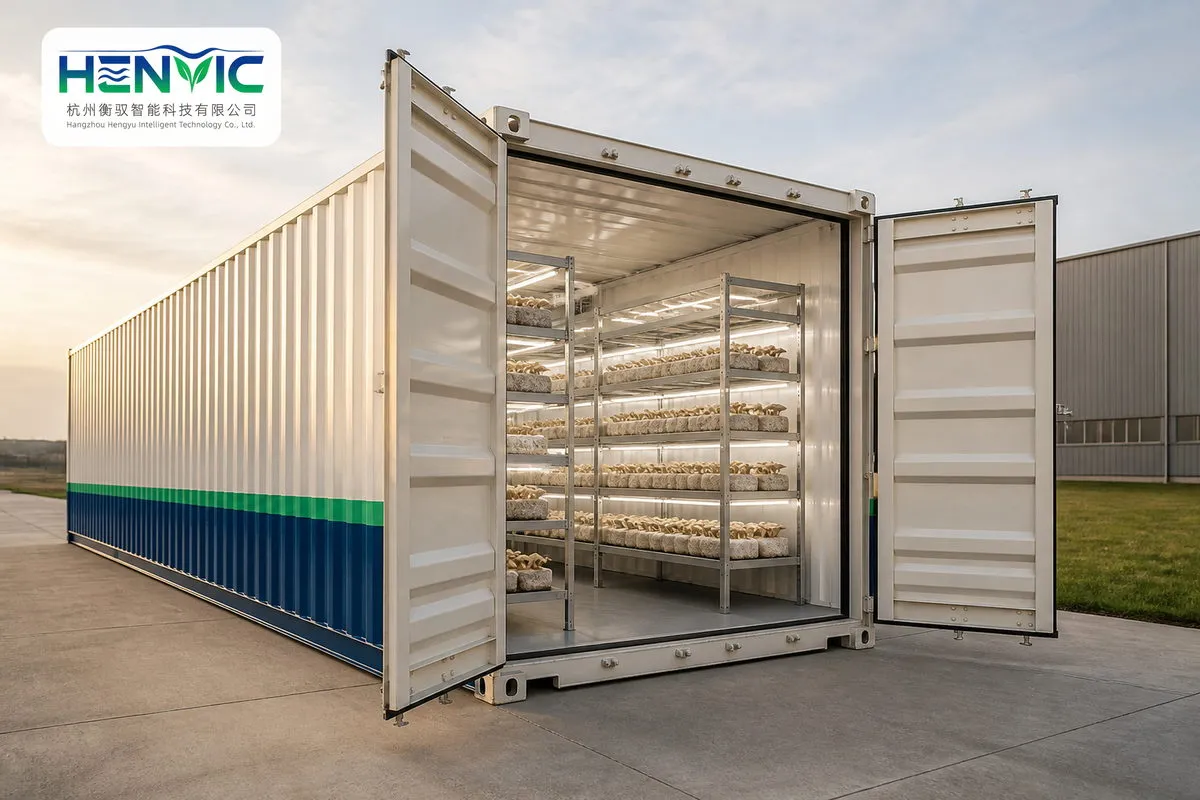
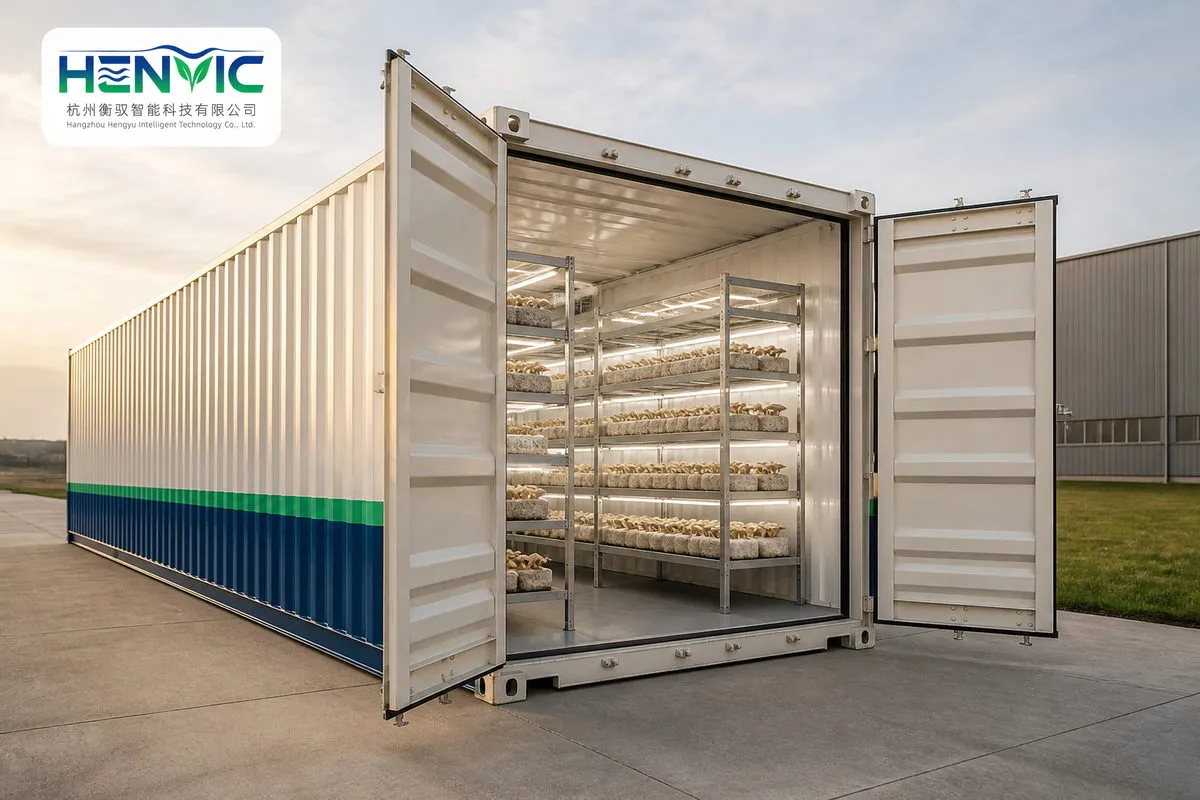
The containerized Matsutake cultivation system utilizes standard shipping containers adapted into precision biological reactors. The spatial arrangement and engineering must be specifically customized to support the unique growth cycles of mycorrhizal fungi.
3.1. The Structural Enclosure
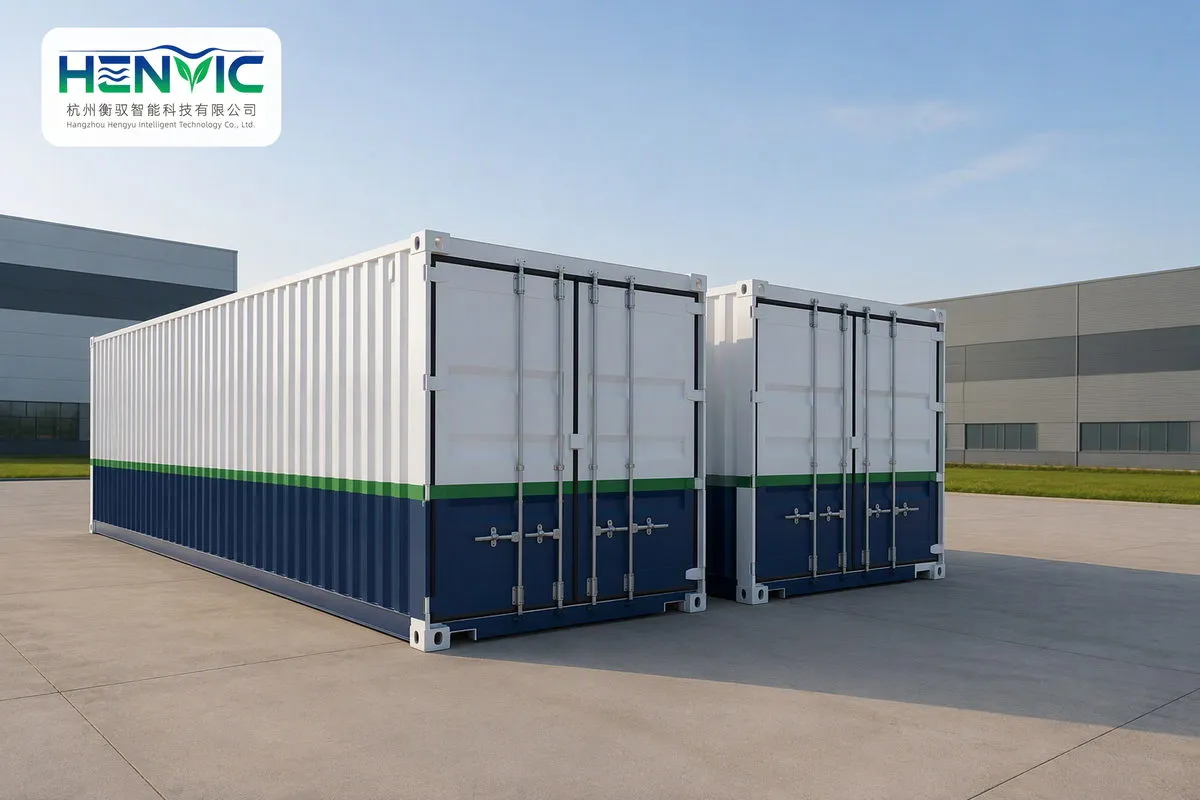
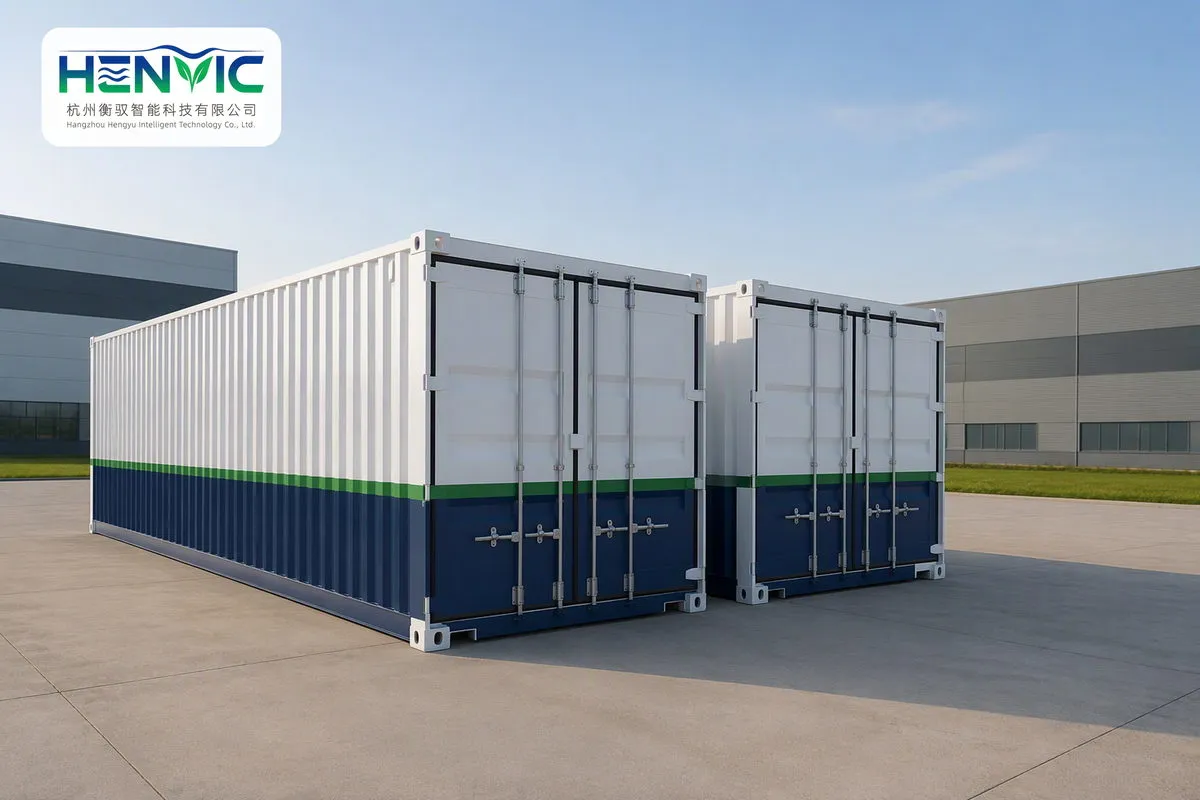
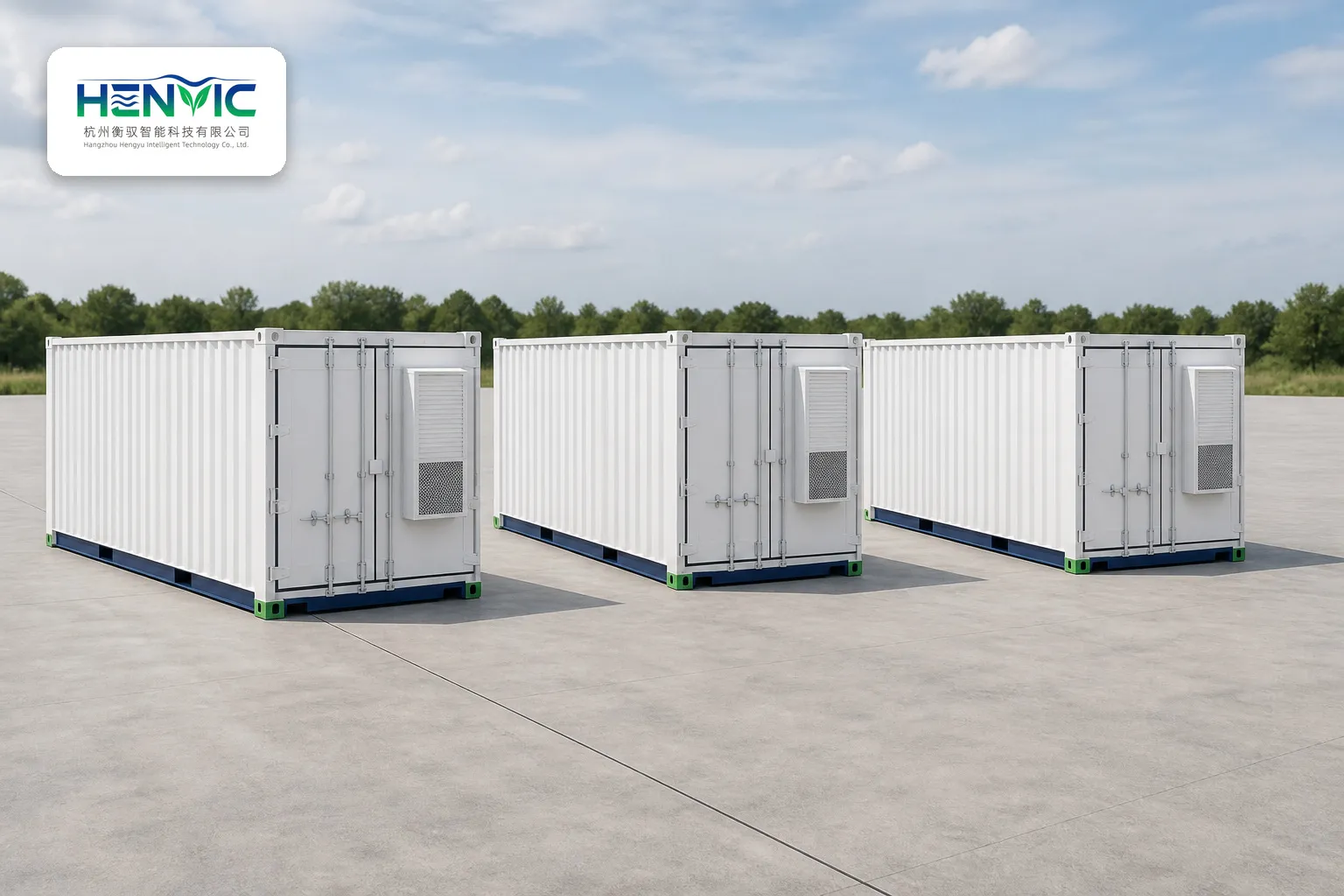
A standard 20-foot or 40-foot shipping container undergoes thermal and structural retrofitting. The exterior is fitted with high-density thermal insulation, while the interior is lined with food-grade, non-toxic, waterproof panels to facilitate strict environmental control and easy sanitation[6].
3.2. Microclimate Control Module
The heart of the container system is the HVAC (Heating, Ventilation, and Air Conditioning) module paired with a humidification system. Unlike standard green crops, Matsutake requires a "cool and humid" microclimate to trigger primordia (fruiting body initials) formation. Automated ventilation fans ensure continuous fresh air exchange, preventing the accumulation of metabolic gases such as carbon dioxide, which can cause malformed, elongated mushroom caps[7].
3.3. Illumination System
Matsutake branches and fruits require diffuse light to mimic a forest understory. The system employs low-heat, spectrum-tunable LED modules. These lights simulate the shaded, dappled sunlight of a coniferous forest, significantly accelerating the maturation of the fruiting bodies while maintaining their signature aroma and texture[8].
3.4. Automated Hydration and Irrigation
Precise watering is essential for both mycorrhizal colonization and fruiting. The container features a high-frequency misting system that maintains the moisture level of the cultivated substrate. Advanced systems integrate capacitive moisture sensors, administering micro-doses of water to prevent over-saturation, which could lead to anaerobic conditions and root rot[9].
4. Operational Workflow and Management Protocol
Running an efficient containerized Matsutake farm requires a phased operational workflow.
4.1. Substrate and Inoculation
Preparation begins with a sterilized substrate medium, often a blend of organic soil, coniferous sawdust, and specific nutrients. This medium is inoculated with pure Tricholoma matsutake mycelium under aseptic conditions. Uniform distribution of the substrate in vertical racks maximizes the use of the container's internal volume[10].
4.2. Mycorrhizal Colonization Stage
This is a critical biological phase. The mycelium must establish a stable network without immediately fruiting. During this stage, the container’s environmental parameters are tuned to favor mycelial expansion—keeping the environment relatively dark, stable in temperature, and moderately moist.
4.3. Primordia Induction and Fruiting
Once the substrate is fully colonized, the environmental triggers are altered. The system slightly lowers the temperature, introduces diffused light, and increases the humidity and air flow. These simulated "seasonal shifts" signal the mycelium to form primordia. The container autonomously maintains these optimal parameters, leading to the uniform, synchronous emergence of mushrooms.
4.4. Harvesting
Matsutake mushrooms must be harvested at the precise point of maturity before the cap fully opens (the "veil" must remain intact). Automated visual sensors in advanced systems monitor the growth rate and trigger a harvest alert, allowing operators to collect the highest quality produce to preserve their exceptional market value[11].
5. Advantages of Containerized Cultivation
The adoption of containerized technology for Matsutake offers profound benefits over traditional soil-based or open-field semi-cultivation techniques.
5.1. Superior Food Safety and Purity
By operating in a sealed, climate-controlled box, the crop is shielded from wild contaminants, heavy metals in natural soils, and unpredictable airborne pathogens. This guarantees a clean, pesticide-free, and chemically stable product that meets premium export standards.
5.2. High Space Efficiency and Modularity
The system uses multi-tier vertical racks within the container, maximizing spatial utilization. A single standard 20-foot container can yield a competitive harvest equivalent to a much larger traditional plot. Moreover, the modular nature allows farmers to scale up production simply by adding more containers, minimizing land requirements and enabling localized production close to urban markets[12].
5.3. Energy Efficiency and Sustainability
Because the container functions as a thermal envelope, less energy is required to maintain internal temperatures compared to large-scale open greenhouses or indoor facilities. Additionally, water and nutrient solutions are often applied in a closed-loop manner, minimizing agricultural runoff and conserving precious natural resources.
6. Future Trends and Future Prospects
As technology evolves, containerized Matsutake farming is set to become increasingly intelligent. The integration of Artificial Intelligence (AI) and the Internet of Things (IoT) will soon allow systems to autonomously predict fungal growth patterns, auto-calibrate humidity based on transpiration rates, and diagnose early signs of mycelial stress.
However, researchers are actively working to develop faster-colonizing strains and optimized, cost-effective substrate formulas. As biological breakthroughs lower the barrier to entry, the containerized approach will transition Matsutake from an exclusive wild delicacy into a standard, sustainable agricultural commodity.
7. Conclusion
Containerized cultivation technology provides an innovative and highly efficient framework for the industrialized production of Matsutake. By translating the complex biological and ecological requirements of this prized mushroom into precise environmental parameters, this technology solves the longstanding challenges of contamination and environmental dependency. As the global demand for high-value, sustainable food continues to grow, containerized farming will undoubtedly play a pivotal role in ensuring a stable, high-quality supply of Matsutake.